

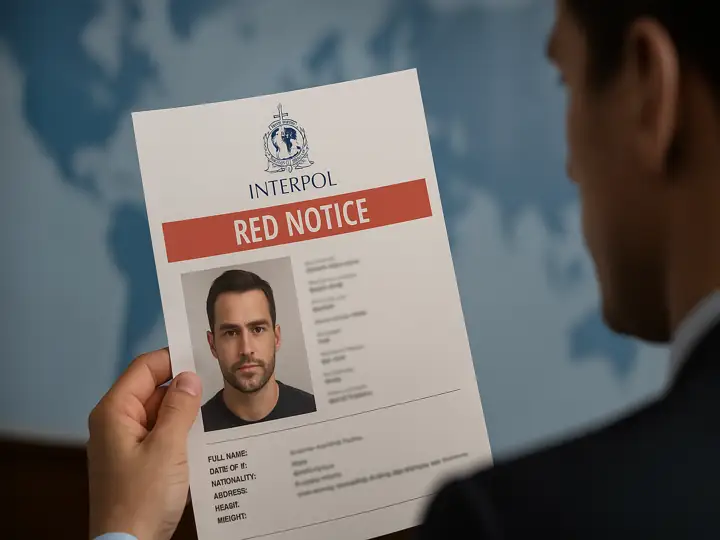
Understanding Interpol’s Red Notices and Human Rights Implications
Interpol plays a vital role in global law enforcement collaboration, facilitating international police cooperation.
However, its mechanism, particularly the issuance of Red Notices, often raises significant human rights concerns.
While designed to assist in the arrest and extradition of fugitives, Red Notices can sometimes be misused against individuals for political or personal reasons.
This article delves into the nuances of Interpol’s Red Notices, their impact on human rights, and highlights the importance of legal representation in navigating these complex waters. For in-depth insights, consider visiting the Interpol & Red Notice Human Rights Defense service.

What is Interpol?
Interpol, short for the International Criminal Police Organization, is an intergovernmental organization that facilitates international police cooperation.
Founded in 1923 and headquartered in Lyon, France, Interpol’s primary mission is to help law enforcement agencies collaborate on cross-border crime issues.
It provides a platform for sharing information on criminal activities, fugitives, and missing persons—effectively becoming a backbone for transnational crime prevention.
Understanding Red Notices
A Red Notice is a request to law enforcement worldwide to locate and provisionally arrest a person pending extradition.
However, it is essential to understand that a Red Notice is not an international arrest warrant; it does not compel member countries to arrest the individual in question.
Instead, it serves as a notification about a wanted person based on information supplied by the country seeking the arrest.
The issuance of a Red Notice occurs after a member country submits a request to Interpol, which is reviewed for compliance with Interpol’s rules, particularly the condition that the notice must not be politically motivated, nor should it infringe on fundamental human rights.
Unfortunately, political misuse of the Red Notice system is not uncommon, and this raises significant concerns regarding human rights violations worldwide.
Human Rights Concerns
The interaction between Interpol’s activities and human rights can be complex.
While Interpol aims to uphold the rule of law, there have been instances where Red Notices have been utilized to persecute political dissidents, journalists, or activists.
Some of the prominent human rights concerns associated with Red Notices include:
- Political Persecution: Governments may exploit Red Notices to arrest opposition figures or human rights defenders under the guise of legitimate law enforcement.
- Due Process Violations: Individuals subjected to Red Notices may not have been given an opportunity to contest the allegations or defend themselves in court, leading to unfair treatment.
- Lack of Transparency: The processes surrounding the issuance and actions taken on Red Notices often lack transparency, making it difficult for individuals to challenge them effectively.
- Risk of Torture or Mistreatment: There are concerns that individuals extradited due to a Red Notice may face torture or inhumane treatment in their home countries.
Case Studies and Examples
Numerous case studies highlight the human rights implications of Red Notices.
For instance, cases involving individuals from countries with a history of political oppression illustrate how leaders may manipulate Interpol processes to silence dissent.
One such case involved a well-known journalist who criticized a government regime.
Following the publication of her investigative reports, the government requested a Red Notice, claiming she faced charges related to defamation and terrorism.
The outcome of the case raised alarms among human rights organizations, leading to calls for reform of Interpol’s practices to safeguard against such abuses.
Legal Framework and Reform Initiatives
In recent years, there have been various calls for reforming Interpol’s processes to enhance the protection of human rights.
Some of these initiatives include:
- Independent Oversight: Proposals to establish independent mechanisms or bodies to oversee the issuance of Red Notices to ensure compliance with human rights standards.
- Clearer Guidelines: Advocating for more transparent criteria for issuing and lifting Red Notices, ensuring that they align with international human rights laws.
- Legal Support for Affected Individuals: Strengthening legal representation for those facing Red Notices, providing them with additional resources to counter these actions.
Conclusion
The balance between international law enforcement and human rights is delicate, particularly concerning mechanisms such as Interpol’s Red Notices.
While the justification for Red Notices lies in combating crime and enhancing safety, the potential for misuse requires vigilant oversight and reforms to ensure the protection of innocent individuals from unlawful persecution.
As global awareness grows, it is essential for legal experts, human rights advocates, and policymakers to continue pursuing improvements in the systems governing international law enforcement, thereby fostering a fairer and more just global legal landscape for all.